


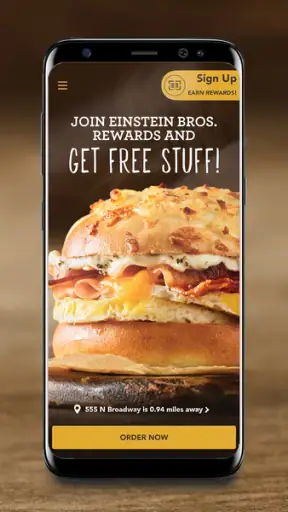
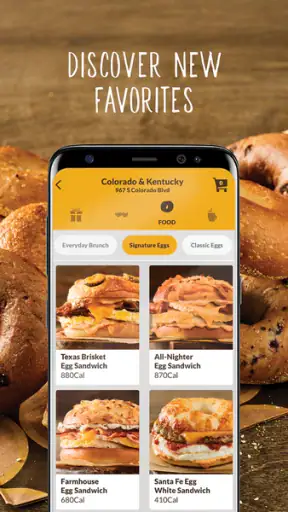
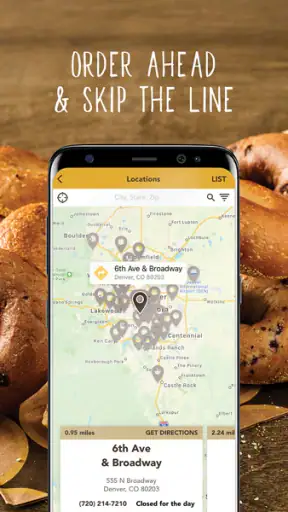
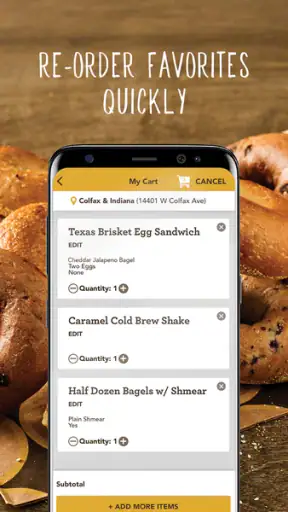
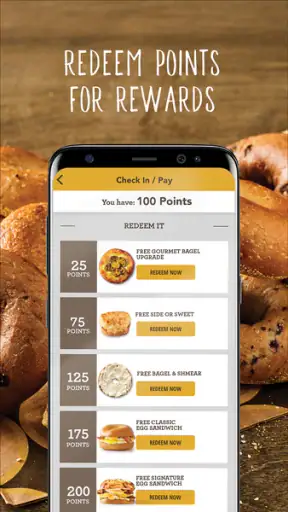
I found Einstein Bros Bagels most useful when I treated it as a quick bridge between deciding what to order and earning something from the visit. It is a free Food & Drink app from Bagel Brands, built around paying by phone and checking in for rewards rather than trying to replace the whole café experience. That focus makes sense: when I am already heading to an Einstein Bros Bagels location, the app can reduce a little friction at the counter and keep my loyalty activity in one place.
It is also a fairly established choice in its category. The app has a 4.7 average from around 20 thousand ratings and has passed one million installs, so it clearly appeals to more than occasional bagel browsers. I would still judge it by a narrower question: does it make repeat visits easier for you, especially when your phone has a dependable connection? In my experience, that is where its value is strongest, and also where its main limitations become visible.
How the app feels when connectivity matters
The best moments happen before I reach the counter
The most useful workflow starts while I am still deciding what I want. I can open the app, check the available Einstein Bros Bagels experience, and prepare for the visit instead of standing at the register with my phone in one hand and my order in the other. The important point is not that the app transforms breakfast; it simply puts payment and rewards-related actions closer to the moment when I need them.
That convenience depends on the app being able to communicate normally. Opening a screen, confirming an account action, or completing a payment-related step is much less reassuring when the connection is slow. I would not begin a complicated order or attempt to sort out a rewards issue while moving through a weak-signal area. My practical tip is to open the app before entering the shop, while the connection is stable, and make sure the screen you need is ready.
This is a small habit, but it changes the experience. Instead of discovering a loading problem when a line is waiting behind me, I get an early warning that I may need another payment method. The app is most comfortable as a preparation tool, not as something I troubleshoot under pressure.
What a normal mobile visit looks like
A realistic use case is a weekday morning when I am stopping for a bagel on the way to work. I open the app before leaving, check the relevant options, and use the mobile payment or check-in flow when I arrive. If everything loads normally, the phone becomes a practical shortcut: I do not need to explain that I want my visit associated with my rewards activity, and I can keep the transaction tied to the same account I use on other visits.
That routine is especially appealing to regular customers. Someone who visits only once may find that paying directly is faster than installing an app, creating an account, and learning its layout. For a repeat customer, though, the small amount of setup can make sense because the reward activity is connected to the visits you were already going to make.
I also like the distinction between convenience and necessity. You do not need this app to enjoy a bagel, and I would not recommend downloading it solely because you are curious about one location. Its strongest case is repeated use: the person who already buys from Einstein Bros Bagels and wants a dedicated way to handle payment and rewards.
Why a phone-first workflow is not always better
Mobile ordering habits can create their own distractions. If I am with friends, carrying bags, or trying to get through a busy entrance, looking down at a phone can be less convenient than simply paying in the usual way. A dedicated app also adds another account to remember and another place where a login or payment detail might need attention.
There is a trade-off between speed and control. The app gives me a more direct relationship with the brand’s payment and rewards process, but a regular card or another familiar payment option may feel simpler for a one-off purchase. I would choose the app when I expect to return, not automatically for every visit.
Another useful habit is to review the reward or check-in result before closing the app. I would not assume that tapping a button means the visit has definitely been recorded. A visible confirmation is more useful than relying on memory, particularly when the connection hesitates. This is one of those small checks that can prevent a frustrating conversation later.
Recovering when the connection or session misbehaves
The most important limitation is that a connectivity-dependent workflow can fail at exactly the wrong time. A page may take too long to load, a payment step may need to be repeated, or a check-in action may not feel clear. I would avoid repeatedly tapping a payment control when the result is uncertain. First I would pause and look for a confirmation, then check whether the transaction appears complete before trying again.
If the app does not respond, my fallback would be simple: use the ordinary payment method at the shop and keep the receipt or transaction details. That is less elegant than completing everything in the app, but it is safer than holding up the line or risking duplicate attempts. Once I have a stable connection, I can reopen the app and see whether the account activity has updated.
Force-closing and reopening can help with a temporary display problem, but I would not treat that as a guaranteed fix. If the issue is account-related or caused by the network, restarting the app only resets the screen. My troubleshooting order is deliberately conservative: wait, verify, switch to a reliable connection if available, and use a normal payment fallback when the purchase cannot wait.
The current version is 5.3.7, and the app requires at least iOS or Android version 10. Keeping the operating system and app reasonably current is sensible for any payment-focused tool, but compatibility still matters. If your phone is older than that requirement, this is not a practical option, no matter how useful the rewards workflow sounds.
Using it without wasting mobile data
This is not an app I would expect to consume large amounts of data during an ordinary visit, but a data-conscious routine is still worthwhile. I would open it on Wi-Fi before leaving when that is convenient, avoid repeatedly refreshing screens, and wait for a stable connection before starting a payment action. The goal is not to micromanage every tap; it is to avoid turning a short breakfast stop into a series of failed reloads.
If your mobile plan is limited, the more important concern is reliability rather than volume. A weak connection can make you retry actions, and those repeated attempts are more frustrating than the normal app traffic. Preparing the app before entering a basement, parking structure, or crowded building can make the experience feel much smoother.
I would also be careful about assuming that a screen already seen once will remain fully usable later without a connection. The app’s central activities involve current account, payment, or rewards information, so I would plan around having access to a network. I would not rely on it as an offline wallet or assume that a previously opened page guarantees that every later action will work.
Privacy and account habits I would use
Because the app handles payment and rewards-related activity, I would use a password I do not reuse elsewhere and protect the phone itself with its normal lock screen. I would also sign out or review the account if I were using a shared device. These are basic precautions, but they matter more here than they would for an app that only displays recipes or restaurant pictures.
I would keep notifications purposeful rather than allowing every alert. If the app offers a setting that is useful for rewards or account activity, I would keep that one and silence anything that feels distracting. A loyalty app should save time, not create a new stream of interruptions that encourages unnecessary visits.
For people who are particularly cautious about personal data, the decision is straightforward: use the app only if the payment and rewards convenience is worth maintaining another brand account. Someone who prefers cash or a standard card for every purchase may reasonably decide that the extra account is not worthwhile. That is not a failure of the app; it is a mismatch between its design and the user’s preferred way to buy food.
How it compares with the usual alternatives
The obvious alternative is paying directly at the restaurant. That approach wins for simplicity, especially when I am making a single visit, have no interest in rewards, or do not want to depend on a phone connection. It also gives me a clear fallback when the app is slow. The Einstein Bros Bagels app wins when I return often enough for check-ins and account-linked payment to matter.
A general mobile wallet can be more flexible because it may work across many restaurants and stores. However, it does not necessarily give me the same brand-specific rewards workflow. I see the two tools as complementary rather than interchangeable: a general wallet can be the backup or the preferred payment method, while the Einstein app can handle the loyalty side when I want that connection.
Using a mobile browser is another possible middle ground, but a dedicated app is usually more convenient for a repeated routine. The trade-off is that the app takes up space, needs an appropriate operating system, and creates another account to maintain. If I visit Einstein Bros Bagels only occasionally, the browser or direct-payment route may be less effort overall.
Who will get the most from it
I would recommend it to regular Einstein Bros Bagels customers who want one place for paying by phone and checking in for rewards. It is also a good fit for people who are comfortable preparing an app before they arrive and who usually have dependable mobile data or Wi-Fi. The free price removes the financial barrier, and the Everyone content rating makes it broadly accessible as a food-and-drink utility.
I would be more hesitant to recommend it to someone with an unsupported phone, unreliable connectivity, very limited data, or no interest in brand loyalty programs. It is also not the right choice if your main goal is comparing many restaurants in one app. Its usefulness is deliberately tied to Einstein Bros Bagels, so its value grows with your familiarity and frequency rather than with broad restaurant discovery.
My connectivity verdict
After using it as a repeat-visit companion, I see the app as a focused convenience rather than an essential food tool. Its best feature is the way payment and check-in fit into an existing Einstein Bros Bagels routine. When the connection is good, the process feels quick and natural; when the connection is poor, the app needs more patience than a normal card payment.
My advice is to install it if you already visit the brand regularly, set it up before your next rushed breakfast, and test the check-in and payment flow while you have time to recover from a problem. Keep a normal payment option available, especially on busy mornings. That simple backup removes most of the risk without giving up the rewards convenience.
Bagel Brands has kept the concept clear, and the app’s strong 4.7 average suggests that many users find that clarity worthwhile. I would not call it a replacement for every way of paying, but I would recommend it to the customer it was made for: someone who returns often, wants brand-specific rewards, and is happy to let a phone handle part of the visit. For that person, the real benefit is not ordering from a screen; it is making repeat purchases easier to track and complete.


